Numerical superiority under constraint
Scipio needs the Iberian contingents to offset his numerical inferiority. Ancient totals differ, but the accounts agree that the Punic army is larger and that its allies have a role in the Roman deployment.
Battle
Scipio places his Romans on the wings while the Iberian centre keeps the Africans out of the fighting
Military history
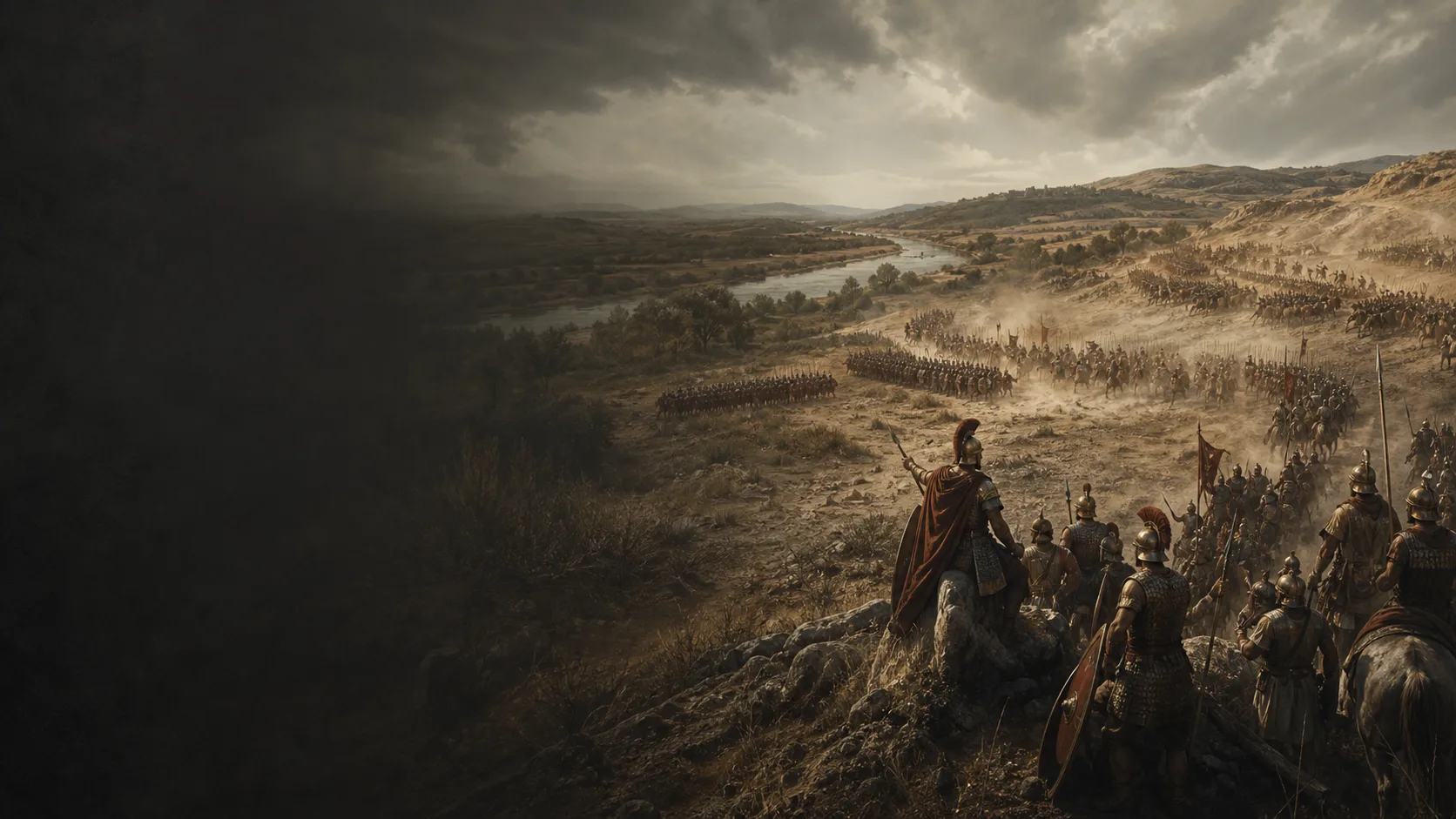
In 206 BC, Scipio faces Hasdrubal son of Gisco and Mago in Spain. After several days of similar deployments, he reverses his formation: his legionaries move to the wings, while his Iberian allies hold back in the centre. The best Punic troops are thus kept out of the decisive clash as their wings face a combined attack.
Scipio needs the Iberian contingents to offset his numerical inferiority. Ancient totals differ, but the accounts agree that the Punic army is larger and that its allies have a role in the Roman deployment.
Mago and Masinissa launch their cavalry against the Roman camp. Scipio has concealed an equal force below a rise; the attack is repulsed. Over the following days, both camps commit cavalry and light troops, then draw up their armies without fighting a general engagement.
Hasdrubal places Africans in the centre, Iberians on the wings, and elephants in front of the flanks. Scipio usually faces them with his legionaries in the centre. The armies repeat these deployments without committing their heavy infantry.
Scipio has his men eat before dawn and immediately sends cavalry and velites to harass the enemy camp. Hasdrubal must deploy unfed in his usual order; when the lines form, the Romans and Italians now occupy the wings, while the Iberian allies advance slowly in the centre.
Explore
Military history
XI.20–24, notamment 21 pour les contraintes romaines, 22 pour les ordres répétés, 23 pour le mouvement des ailes et 24 pour le non-engagement des centres
Reported troop strengths, reliance on Iberian allies, Mago and Masinissa’s attack, repeated deployments, meal and advance at dawn, reversal of contingents, different movement of centre and wings, elephants, uncommitted African centre, withdrawal and rain.
View ↗XXVIII.12–16, surtout 13–14 pour les sorties et le combat, 15–16 pour le camp, les désertions et la poursuite
Alternative totals, cavalry attack, days spent facing one another, the order of both armies, morning meal, prolonged skirmishing, movement of the wings, heat and hunger, orderly withdrawal followed by flight, rain, nocturnal evacuation of the camp, pursuit, about 6,000 men regrouping around Hasdrubal and the commanders’ flight to Gades.
View ↗Journal of Roman Studies 26 (1936), p. 19–23 ; extrait public consulté, surtout le résumé des indices topographiques
Cautious inventory and cartographic reconstruction of the only site clues supplied by Polybius and Livy—high ground, plain, camps and possible connection with the Baetis. Consultation was limited to the public excerpt. The full article lies beyond the documentary use made here.
View ↗University of Liverpool, thèse de doctorat (2016), p. 77 ; DOI 10.17638/03000526
State of the topographical uncertainty: traditional attribution near Alcalá del Río, the existence of several places called Ilipa, a competing eastern proposal and the absence of an archaeologically identified battlefield at Ilipa.
View ↗