1. Home
  2. Antiquity
  3. Second Punic War
  4. Ticinus

Battle

Ticinus

218 BC

A cavalry reconnaissance turns to Hannibal’s advantage

Military history

How did a reconnaissance conducted with all available cavalry force Scipio to abandon the Ticinus plain?

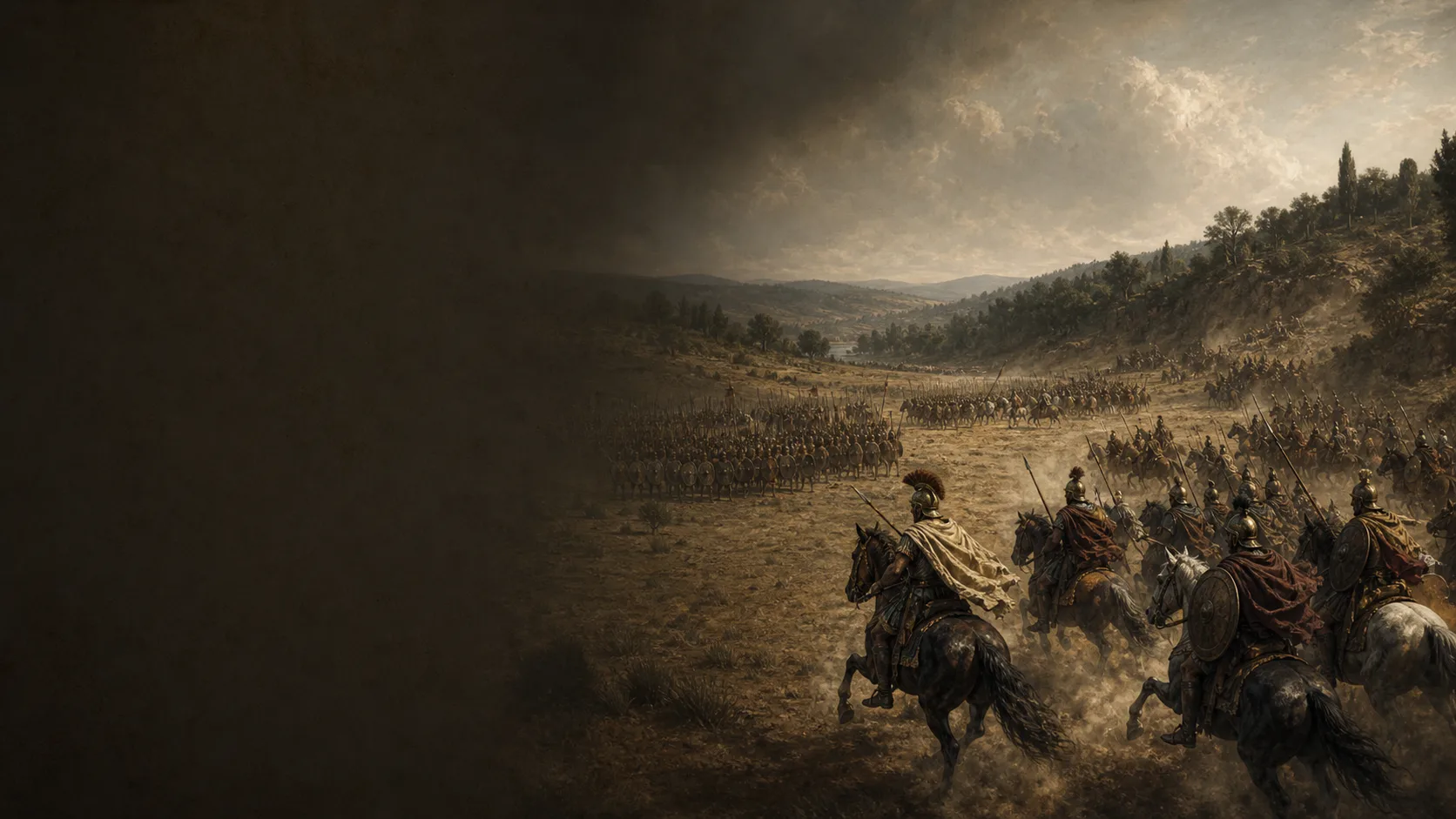
Scipio and Hannibal ride out with their cavalry to reconnoiter the enemy, Scipio adding foot javelinmen. Dust reveals the approach of both detachments; the frontal fight is initially balanced, then the Numidians reach the Roman rear. The consul is wounded and his cavalry returns to camp; the Roman army evacuates the area the following night.

Two armies seek each other on the plain

After crossing the Alps, Hannibal and Scipio advance on the same bank of the Po. Their scouts report the enemy nearby; both generals make camp, then ride out the next day with their cavalry to reconnoiter the opposing force.

The legions remain in camp

Polybius has neither Scipio’s legions nor Hannibal’s infantry take part: only cavalry, plus Roman javelinmen. The result therefore does not destroy a consular army, but reveals a mounted balance of forces unfavorable to Rome.

The battle also has political stakes

Hannibal spares Gallic territories and seeks to detach their leaders from Rome. After the encounter, Polybius has neighboring Celts arrive with supplies and contingents; the tactical success therefore immediately improves his position in the Po Valley.

Military history

Sources

Primary sourcePolybe, Histoires, livre III

III.64.1–65.11 : franchissement du Tessin, sortie pour reconnaître, javelineurs, combat frontal et débordement numide ; III.66.1–67.5 : blessure, retrait sur le Pô, six cents captifs au pont, ralliements celtes et suite de la campagne

Reconnaissance objective, forces actually deployed, formation, frontal combat, Numidian outflanking move, Scipio’s wound, withdrawal to the Po, and immediate consequences.

View ↗
Primary sourceTite-Live, Histoire romaine, livre XXI

XXI.45.1–47.7 : rencontre, dispositif, combat, blessure et retrait nocturne vers le Pô ; XXI.47.2–7 détaille le pont, les quelque six cents captifs et les variantes de franchissement

Parallel account, formation, the consul’s wound, the Ligurian-slave variant, orderly withdrawal, and Gallic political context.

View ↗
Modern referenceDániel Kozák, « Quirinius’ Sacrifice (Silius Italicus: Punica 4,192–215) »

Acta Classica Universitatis Scientiarum Debreceniensis 60 (2024), p. 57–75 ; surtout p. 57–59 sur le Tessin, la brièveté des récits et la tradition du sauvetage

Criticism of the literary memory of Ticinus, the narratives’ low factual density, competing traditions about Scipio’s rescuer, and exclusion of invented later episodes.

View ↗
Academic overviewSimon Hornblower, Hannibal and Scipio

Cambridge University Press (2024), chap. 3.5, pp. 88–90 : les batailles du Tessin et de la Trébie en 218 av. J.-C., place du combat de cavalerie dans la séquence de l’invasion et prudence sur son échelle

Modern overview of the 218 BCE campaign and control of Ticinus’s operational significance, without turning the skirmish into a general battle.

View ↗
Cartographic and geographical referenceTrismegistos Geo, Ticinum (Pavia)

TM Geo 30699 : coordonnées de Ticinum/Pavie 45.185899, 9.156562 ; renvoi au Barrington Atlas of the Greek and Roman World (2000), pl. 39 E3, et liens vers les atlas géographiques antiques

Verification of the relationship among Ticinum/Pavia, the Ticinus, and its confluence with the Po; the dossier map remains a relative reconstruction of the encounter area.

View ↗

Edited by BattlesInMotion.com