Interactive military-history atlas
Understand how battles turn.
From terrain to weapons, formations to decisions: follow each engagement phase by phase, then place it in its war and period.
Explore battlesEditorial selection · 8 of 95
Enter the field directly.
Each dossier follows a concrete balance of power: terrain, movement, decisions and the moment when equilibrium breaks.
MarathonA thinned Greek centre falls back, then the victorious wings turn against the Persian centre.CannaeHannibal envelops the Roman legions: the centre falls back, the wings are attacked, and the cavalry returns. A major victory that does not end the war.Ayn JalutIn Galilee on 3 September 1260, Qutuz and Baybars face the army Hülegü left under Kitbuqa. Accounts describe a Mamluk withdrawal followed by attacks from several directions, but differ on the commanders and exact sequence. The fighting remains difficult before the Mongol defeat. The victory lets the Mamluks regain the initiative in Syria without ending their wars against the Ilkhanate.AgincourtOn 25 October 1415, Henry V’s army, weakened after Harfleur, finds its road to Calais blocked. Between two woods, French attacks converge on the English archers and men-at-arms. Mud, missile fire and crowding compound one another. The English victory is followed by the execution of many prisoners.AusterlitzNapoleon lets the right wing appear vulnerable, then strikes the Pratzen Heights once the Allies have committed there.AdwaThe Ethiopian army concentrates its forces around Adwa and destroys the Italian columns advancing separately.MidwayIntelligence positions the ambush; dispersed attacks disorganise the defence before the dive-bombers arrive.Dien Bien PhuAn isolated air-land base confronts underestimated enemy logistics and concealed artillery.
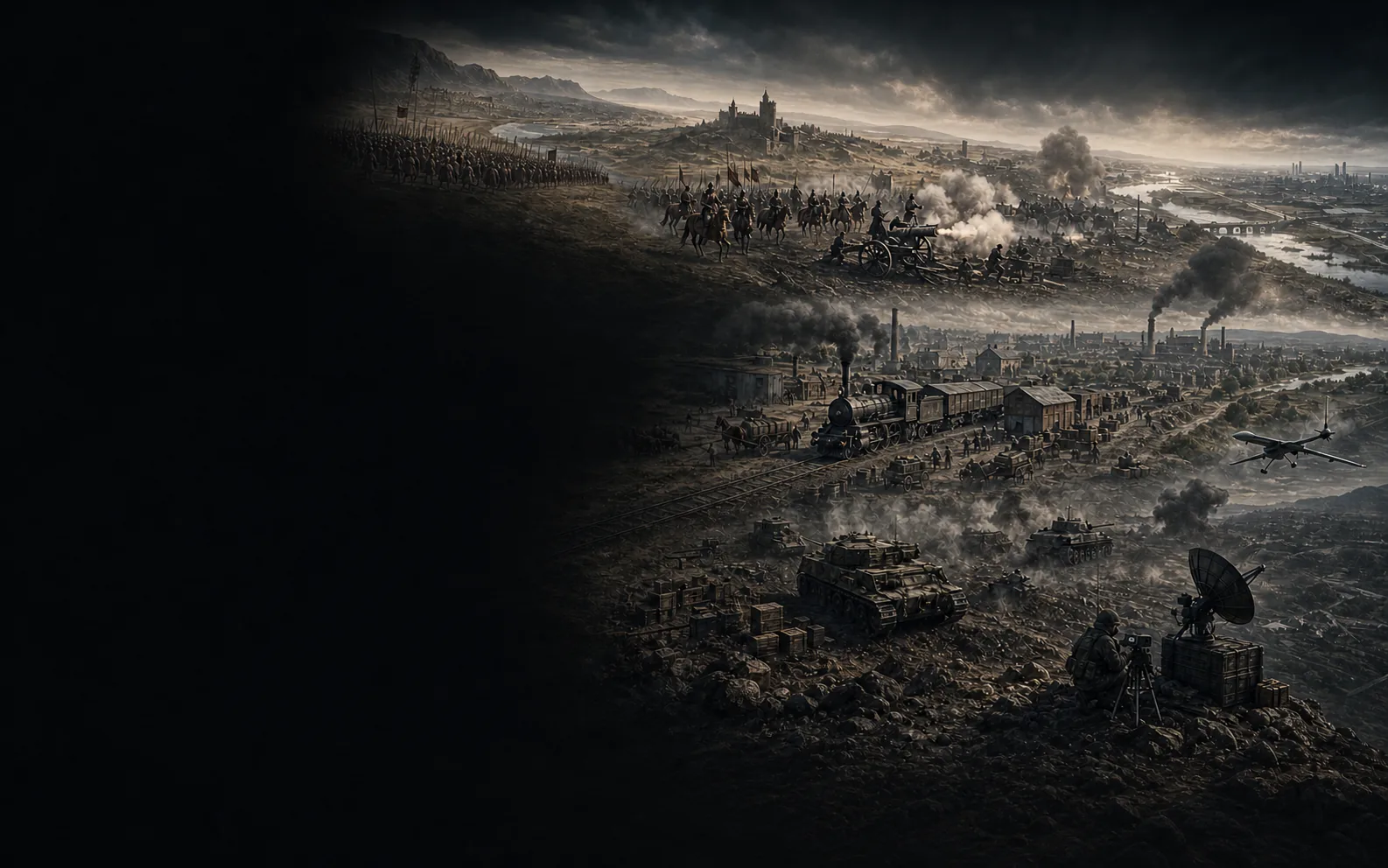
Place it in a period
See what changes when war changes scale.
Each period reshapes terrain, reach, speed and the way armies are commanded.
AntiquityFrom phalanx to legions: collective discipline turns mass into a tactical instrument.Middle AgesFortifications, chivalry, archers and pikemen redefine the relationship between shock, range and terrain.Gunpowder & EmpiresArtillery, firearms and permanent administrations change the scale of campaigns.Industrial AgeRailways, the telegraph and rapid fire accelerate armies faster than doctrine can adapt.World WarsIndustry, operational depth, armour and aviation turn the battlefield into a total system.Contemporary WorldDetection, precision, mobility and information constantly shift the boundary of the front.