From the Ionian revolts to the campaigns of a coalition transformed into a maritime empire
Military history
The strategic problem
The Greco-Persian Wars were not a continuous campaign between two immutable blocs. They began with the revolt of Greek cities already incorporated into the Persian Empire, then spread across the Aegean and mainland Greece. Coalitions changed, as did their aims: after the invasions of Darius and Xerxes, Athens carried the war eastwards and gradually turned a naval alliance into an instrument of power.
The Ionian Revolt and the first expedition
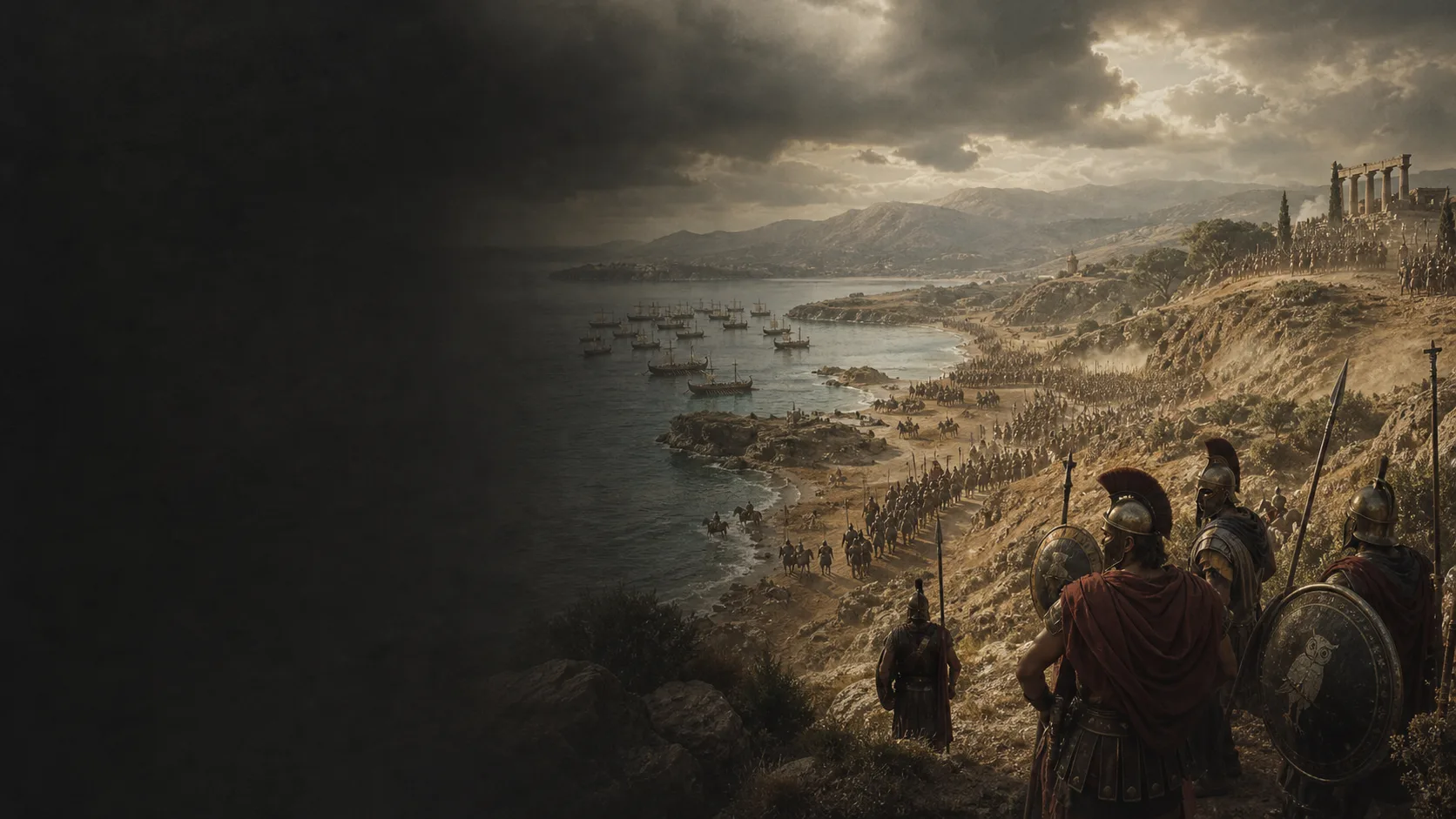
The revolt of Miletus and several Ionian cities prompted a Persian response by sea and land. In 490, Hippias guided the expedition towards Marathon, a plain Herodotus describes as suitable for cavalry; the Athenians then left the city to bar the road, without having chosen the landing site themselves.
Xerxes’ invasion
Xerxes crossed the Hellespont with an army and fleet whose ancient totals cannot be treated as modern headcounts. Thermopylae did not stop the advance. At Salamis, the choice of location and the naval coalition's fragile cohesion became issues in their own right before the battle.
The Greek counteroffensive
After Plataea and Mycale, operations shifted to the Aegean, Cyprus and Egypt. The league whose treasury was initially kept on Delos came under Athenian leadership. Hostilities became less frequent around the middle of the century; the existence, date and exact terms of a ‘Peace of Callias’ around 449 remain disputed.