Reconfigured powers
After the fall of the Western Roman Empire, kingdoms inherit roads, cities and military traditions which they no longer control everywhere with equal density.
Military history
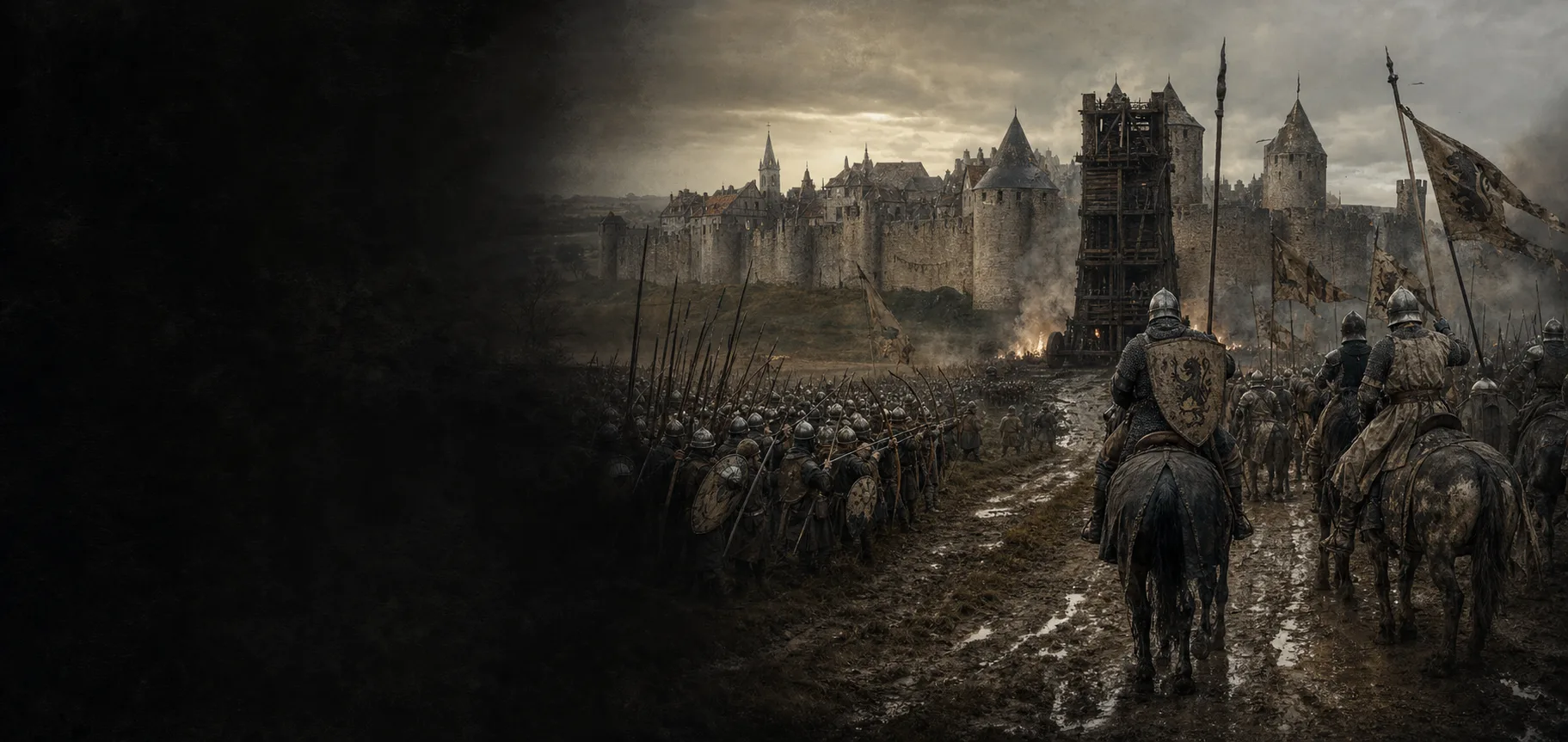
The Middle Ages do not simply replace ancient battle with chivalry. Rulers seek to raise men, hold strongholds, control crossings and sustain an army far from its bases. Cavalry offers mobility and shock, but archers, pikemen, urban militias and engineers often determine a campaign’s real duration.
After the fall of the Western Roman Empire, kingdoms inherit roads, cities and military traditions which they no longer control everywhere with equal density.
Fortifications make the seizure of ground slow and force armies to combine siegecraft, negotiation, supply and control of bridges.
The Mongols show what a mobile, well-informed and coordinated army can do over great distances; their opponents learn to respond through depth, strongholds and cavalry.
Archers, crossbowmen, pikemen and early firearms make the charge less automatic and increase the value of prepared ground.
Explore
Military history
Routledge, 1999 ; chapitres 2–3, 5–12 et 15
Mobility, fortifications, resources and the organization of medieval campaigns.
View ↗Weapons, formations and regional contexts to compare with narrative sources.
Political and military transformations among Roman legacies, Islamic powers and European monarchies.