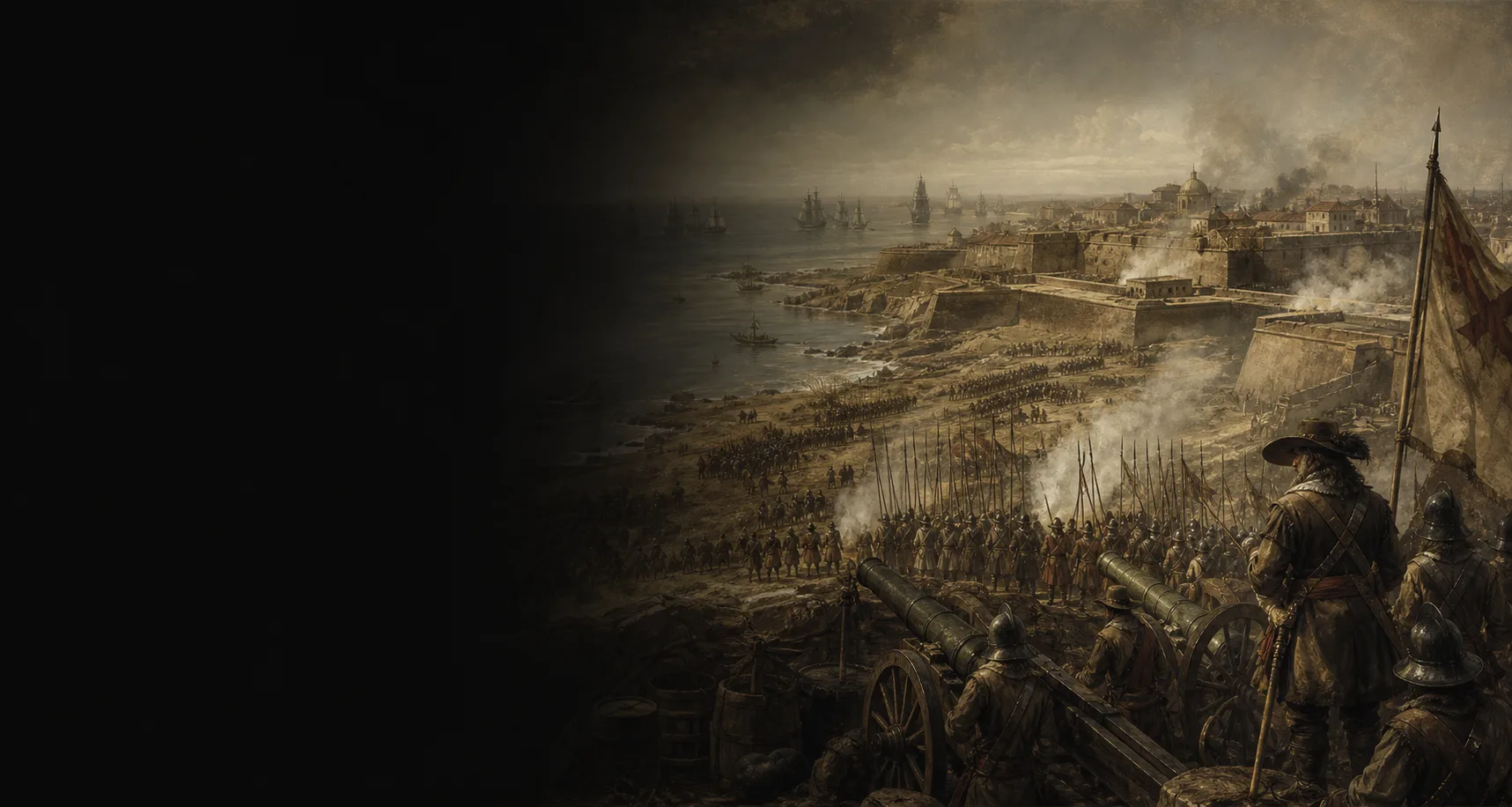
Gunpowder enters the system
Artillery, arquebuses and bastioned fortifications reshape the defence of strongholds and make sieges more technical without eliminating close combat.
Military history
Between the end of the Middle Ages and the early nineteenth century, firearms do not win on their own. Their effect depends on states able to make powder, pay soldiers, maintain fortresses and move convoys. European, Ottoman, Russian, Mughal and colonial empires combine firepower, cavalry, naval power and administration in very different balances.
Artillery, arquebuses and bastioned fortifications reshape the defence of strongholds and make sieges more technical without eliminating close combat.
Taxation, magazines and administration allow states to maintain troops and conduct campaigns longer than seasonal levies.
Disciplined fire, line infantry and mobile artillery reward order, while coalitions seek to prevent an opponent from concentrating resources.
Political revolution, conscription, army corps and speed of concentration project war onto a continental scale.
Explore
Military history
Cambridge University Press, deuxième édition, 1996 ; ISBN 9780521479585
Debate on fortifications, taxation, standing armies and the transformation of European warfare.
View ↗The relationship between states, operations, technology and the limits of military-revolution models.
Administration, logistics, coalitions and campaign conduct in the age of standing armies.