1. Home
  2. Gunpowder & Empires
  3. Napoleonic Wars

War

Napoleonic Wars

1803 — 1815

Army corps, speed and coalitions: decision seeks the breaking point

Military history

The strategic problem

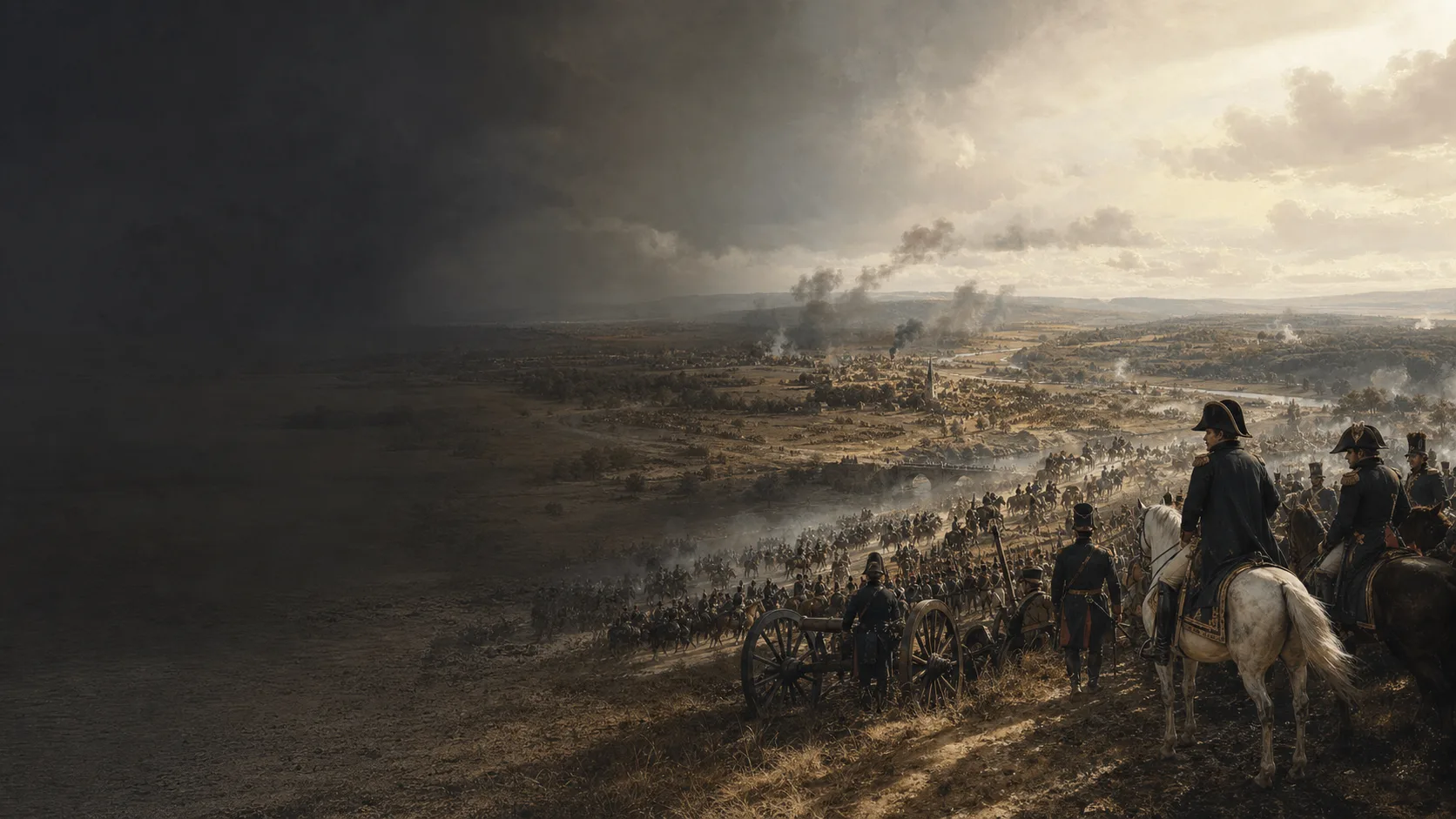
The Napoleonic Wars combine new political mobilization, autonomous army corps and artillery able to support concentration. Napoleon often wins by assembling his forces faster than his opponents, but coalitions learn to avoid isolation, multiply theatres and turn European depth into a logistical problem.

Continental concentration

The campaigns of Austerlitz, Jena and Auerstedt show the power of an army marching in several corps, fixing the enemy and then striking a separate army.

Spain and depth

Guerrilla warfare, garrisons and Allied armies immobilize part of French power. In Russia, distance and a policy of retreat prevent the expected decisive battle.

The coalition learns to converge

France retains local victories, but the Allies coordinate their armies, replace losses and refuse to let a single battle settle the conflict.

Military history

Sources

Contemporary sourcesCorrespondance et bulletins de la Grande Armée

Stated objectives, French decisions and the official language of campaigns, to be checked against opposing archives.

Military historyDavid G. Chandler, The Campaigns of Napoleon

Operational chronology, army corps, marches and command decisions.

Specialist studyMichael V. Leggiere, Napoleon and the Struggle for Germany

Coalitions, strategic depth and the limits of French concentration.

Edited by BattlesInMotion.com