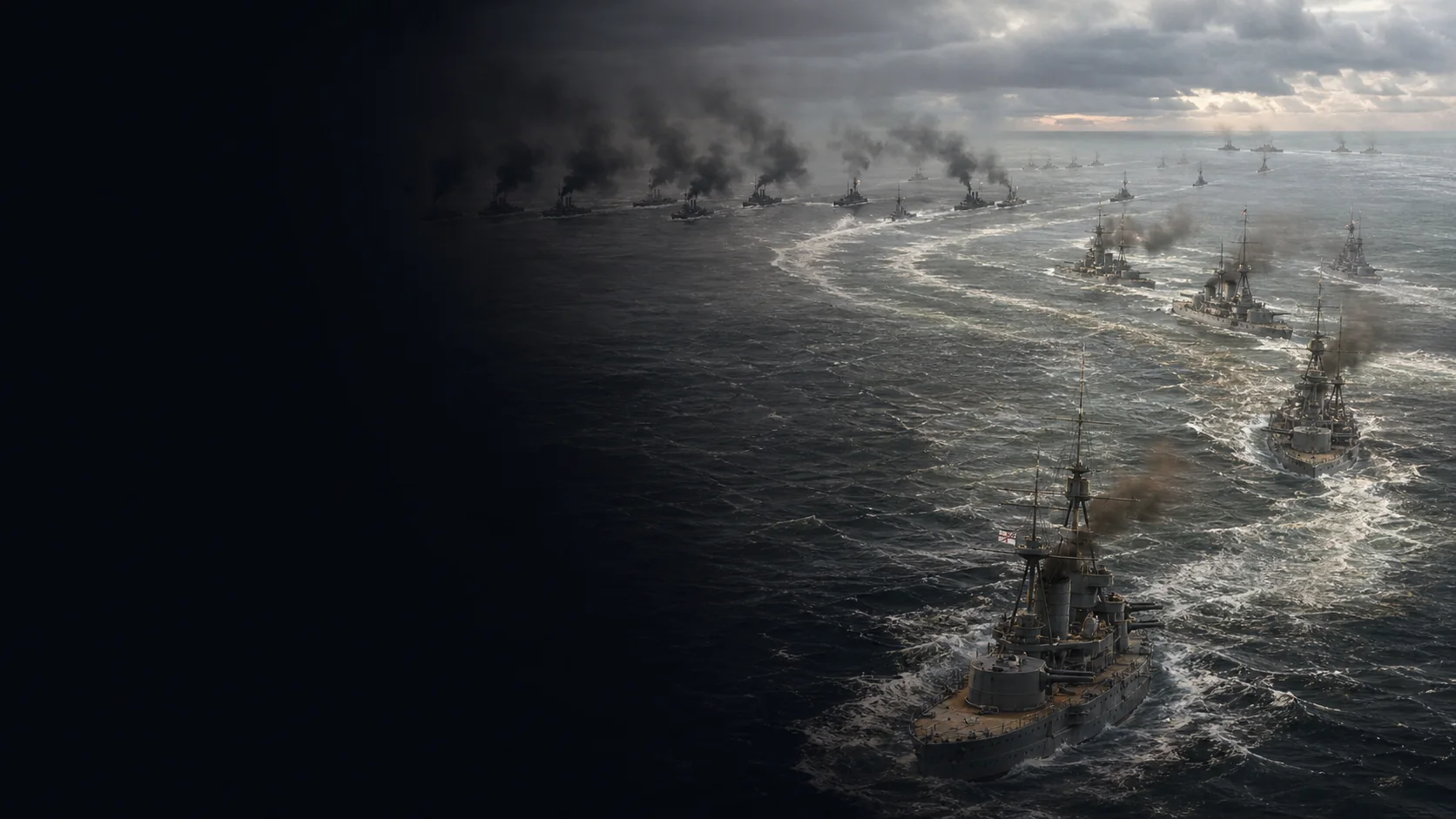
一部艦隊を狙うドイツ側の出撃
シェーアはグランド・フリート全体との正面衝突を意図していなかった。サンダーランド攻撃が実行困難になると計画を変更し、ヒッパーをスカゲラク海峡へ向かわせ、前進してくるイギリス部隊を大洋艦隊へ誘い込もうとした。この構想には、ドイツ艦隊の集中を隠し、標的を十分な時間孤立させることが必要だった。
軍事史
1916年5月31日、ドイツ艦隊はイギリス海軍の一部を誘い出して撃破するため出撃した。しかしイギリス側の情報機関は、ドイツ艦隊より先にグランド・フリートを出動させたものの、完全に信頼できる全体像を与えたわけではなかった。そのため、ビーティーとヒッパーの巡洋戦艦隊は二重の罠を開くことになる。双方が相手を自軍の戦艦部隊へ誘導したのである。シェーアがジェリコーの展開済みの戦列を発見した時点で、問題は初動の砲戦に勝つことではなく、夜までに大洋艦隊(Hochseeflotte)を離脱させることへ変わった。ユトランド沖海戦は、戦闘におけるドイツ側の物的優位、シェーアの作戦的脱出、イギリスによる封鎖の戦略的維持という三つの異なる尺度で理解すべきである。
シェーアはグランド・フリート全体との正面衝突を意図していなかった。サンダーランド攻撃が実行困難になると計画を変更し、ヒッパーをスカゲラク海峡へ向かわせ、前進してくるイギリス部隊を大洋艦隊へ誘い込もうとした。この構想には、ドイツ艦隊の集中を隠し、標的を十分な時間孤立させることが必要だった。
ルーム40は、ドイツ艦隊が出撃する前に、海軍本部がジェリコーとビーティーを出動させることを可能にした。しかしヴィルヘルムスハーフェンにいたシェーアの符号を後から解釈した結果、司令官はまだ出港していないと誤認された。イギリス側は出動配置で優位に立ったが、それを全知と混同してはならない。
エプケンハンスの基準集計はイギリス側151隻、ドイツ側91隻である。補助艦や水雷艇を含める範囲を広げた公的な一覧では、ドイツ側は99隻になる。イギリス側の優勢は明らかで、近代的な弩級戦艦28隻と巡洋戦艦9隻に対し、ドイツ側は弩級戦艦16隻、前弩級戦艦6隻、巡洋戦艦5隻だった。しかし視界、距離、展開に要する時間のため、その優勢を即座に一斉射撃へ変えることはできなかった。
イギリス海軍は、より多くの艦艇、トン数、人員を失った。それでもシェーアはイギリス側後衛を横切って艦隊を帰投させた。ドイツ艦隊は壊滅を免れたが、封鎖を解除できる自由を得たわけでもない。したがって、戦術的砲戦の結果、作戦的脱出、戦略的状況は、それぞれ別の問いに答える。
探索
軍事史
Internet Archive, notice de l’édition de 1916, 107 pp. ; compilation contemporaine des dépêches de Jellicoe et Beatty. Les jalons horaires et la séquence sont recoupés avec Jellicoe, The Grand Fleet, chap. XII–XV.
同時代の公式報告の時系列と性格を確認する。直後に公表された損失推計は、照合すべき主張として扱う。
閲覧 ↗chap. XII, pp. 304–340 ; chap. XIII, pp. 341–369, spécialement pp. 344–346 sur les relèvements et 18 h 14–18 h 16 ; chap. XIV, pp. 370–389 ; chap. XV, pp. 390–414 ; diagrammes pp. 511–514.
イギリス側の行軍序列、位置の不確実性、展開判断、魚雷への対応、夜間の再構成を確認する。
閲覧 ↗chap. X, section « Preparations » ; amorces « The object of the next undertaking was a bombardment », puis « Sunderland » ; « The plan was so far changed » ; « On May 30 » puis « advance in direction of Skagerrak » ; ordre de bataille à la suite.
出撃の目的、計画の変更、ドイツ側の時刻、大洋艦隊の編成を確認する。
閲覧 ↗chap. X, section de l’action des croiseurs ; amorces « At 4.28 P.M. » puis « Elbing », « The enemy deployed to the south » et passages sur Indefatigable, Queen Mary puis la poursuite vers le nord.
ドイツ側から見た最初の接触、ヒッパーの役割、イギリス側の損失、ビーティーの追走を確認する。
閲覧 ↗chap. X ; amorces « There was but one way of averting this—to force the enemy into a second battle » et « The battle-cruisers were ordered to operate with full strength on the enemy’s leading point » ; passages sur fumée, demi-tours et attaque de torpilleurs.
二度目の前進に関する回顧的な説明、二度の同時反転、離脱の援護を確認する。
閲覧 ↗section 6, « The Situation on the Morning of June 1 » ; amorces « I therefore abandoned the idea of further operations », « Losses on Both Sides » et rapport de juillet : « even the most successful result from a high sea battle will not compel England to make peace » ; note sur l’heure allemande GMT+2.
ホーンズ・リーフ経由の帰投、作戦継続の断念、シェーアが認めた戦略的意味、時刻の標準化を確認する。
閲覧 ↗sections « Naval War from 1914–1916 », « The Battle of Jutland » et « Who Won the Battle? » ; paragraphes sur 18 h 15, les deux retournements, 6 094/2 551 morts et 113 000/62 300 tonnes.
戦略的枠組み、比較時系列、トン数、物量上の結果と封鎖維持の区別を確認する。
閲覧 ↗section « Battle of Jutland » ; paragraphes sur l’interception, le déploiement depuis six colonnes, la lumière, les deux retraites allemandes et les rapports nocturnes non transmis.
ジェリコーの意思決定上の制約、展開、グランド・フリートの生存が持つ戦略的意味を確認する。
閲覧 ↗section « The Battle of Jutland » ; paragraphes sur la revendication de victoire, la continuité du blocus et la recommandation ultérieure de guerre sous-marine sans restriction.
大洋艦隊にとっての戦闘の意味と、ドイツ側の戦術的成功の限界を確認する。
閲覧 ↗sections « Does Jutland Still Matter? » et « Command and Control Difficulties » ; paragraphes commençant par « The sheer size of the Royal Navy’s Grand Fleet » et « Perhaps the most glaring example at Jutland came during the night action » ; note de pertes d’après Campbell.
弾薬と防御、信号、夜間行動、両陣営の情報、人的損失の総数を確認する。
閲覧 ↗PDF pp. 1–3 ; p. 1, paragraphe commençant par « Room 40 in the Admiralty » ; pp. 1–2, « There are two versions » sur l’indicatif resté à Wilhelmshaven et la transmission à la flotte.
解読による警報、シェーアに関する解釈の誤り、情報を海軍行動へ移す際の限界を確認する。
閲覧 ↗paragraphes commençant par « The Battle of Jutland began with an encounter » et « Seamen’s lives were lost » ; passages sur la TSF du Lion, la cordite, la 5e escadre, le déploiement, la nuit et les réparations.
時系列、損失の技術的要因、死者6,097人・2,551人の集計、戦闘後の艦隊の可動性を照合する。
閲覧 ↗Plan7, face p.316 : routes entre 14h et18h15 ; image entière examinée.
南進・北進時におけるビーティー、ヒッパー、第5戦隊、主力部隊の相対的な進路を確認する。
閲覧 ↗DiagramI, p.511 : colonnes, relèvements et déploiement à18h16 ; image entière examinée.
イギリス側の展開配置、ドイツ側の接近、二度の接触断絶における位置関係を確認する。
閲覧 ↗DiagramIV, p.514 : routes britanniques nocturnes et matin du1er juin ; image entière examinée.
夜間の相対航路、グランド・フリート後方を通るドイツ艦隊の進路、ホーンズ・リーフへの接近を確認する。
閲覧 ↗Maquette ca.1916 ; description des cinq tourelles de13,5pouces et paragraphe sur le Jutland.
アイアン・デューク級とマールバラ級の図示上の型。個艦の細部を網羅しない。
閲覧 ↗History et fiche technique, Armament ; photographie historique König.
先頭戦艦の輪郭、30.5cm連装砲塔5基。公表された艦の全長は採用していない。
閲覧 ↗Archaeology Notes, fiche technique et note RCAHMS du6janvier2003.
30.5cm連装砲塔4基を備えた巡洋戦艦とユトランド沖海戦への参加。マストの各時期の違いを区別。
閲覧 ↗